


Real estate flyers do two jobs at once. They give buyers something to hold onto after a showing, and they show sellers exactly how you plan to market their home.
A polished flyer shows your professionalism and reinforces your marketing strategy from the very first meeting.
With 91% of sellers relying on an agent to market their home, your real estate flyer should do more than showcase a property.1 This guide covers the essential elements, design and copy decisions, photo standards, and ways to connect print with your digital marketing.
Why Real Estate Flyers Still Work
Print earns attention in a way a listing feed can’t. A buyer scrolls past hundreds of homes online, but they only carry a handful of flyers out of an open house. The flyer sits on the kitchen counter while they compare options that evening.
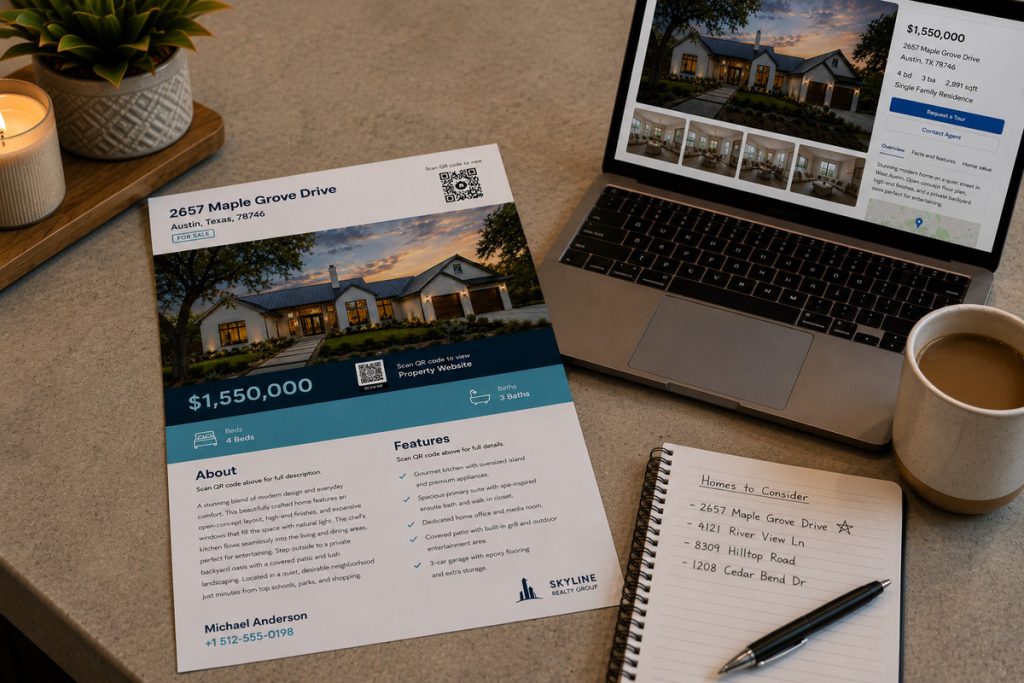
The response data backs this up. Direct mail in real estate pulls a 4.9% response rate from prospect lists and 9% from house lists, according to Direct Marketing Association figures.2 That outperforms typical email and social benchmarks by a wide margin.
Flyers also bridge physical moments to digital action. Someone who grabs a flyer from a yard-sign box wasn’t searching Zillow at that moment. The flyer is often your only shot at that drive-by buyer.
What Should a Real Estate Flyer Include?
A complete real estate flyer needs seven elements: a headline, the price, professional photos, key property details, a short description, your contact information, and a clear next step.
Here’s how each one earns its place:
- Headline: Lead with the property’s strongest selling point, not the word “For Sale.”
- Price: Buyers look for it first. Make it bold and easy to find.
- Photos: One hero image plus two or three supporting shots. More on this below.
- Property details: Beds, baths, square footage, lot size, and anything buyers in your market filter by.
- Description: A short paragraph that sells the lifestyle the specs can’t.
- Agent branding: The Close recommends including your name, brokerage, and contact information at minimum, and many agents add a headshot to stand out.3
- Next step: A QR code or short URL that takes the reader somewhere useful, like a virtual tour or property website.
Miss any of these and the flyer leaves work undone. A beautiful flyer with no next step is a dead end.
Design Choices That Make Flyers Easier to Read
Buyers scan flyers in seconds, so design for the skim. One dominant photo, a clear headline, and generous white space beat a crowded page every time.
Keep fonts legible: clean sans-serifs at 12pt or larger for body text. Limit yourself to two typefaces. Use your brand colors consistently so your flyers, signs, and property sites all look like they came from the same agent.
Showcase Every Property
Professional Flyers, Automatically
Generate branded real estate flyers directly from your listing.

Visual hierarchy should follow the buyer’s priorities. Photo first, then price, then details, then you. Agents sometimes reverse that order and lead with their own branding. Your headshot doesn’t sell the house; the house sells the house.
Use Professional Photos or Skip the Print Run
Photo quality decides whether real estate flyers work. Print is unforgiving: a photo that looks passable as a phone-screen thumbnail turns muddy and dark at full size on paper.
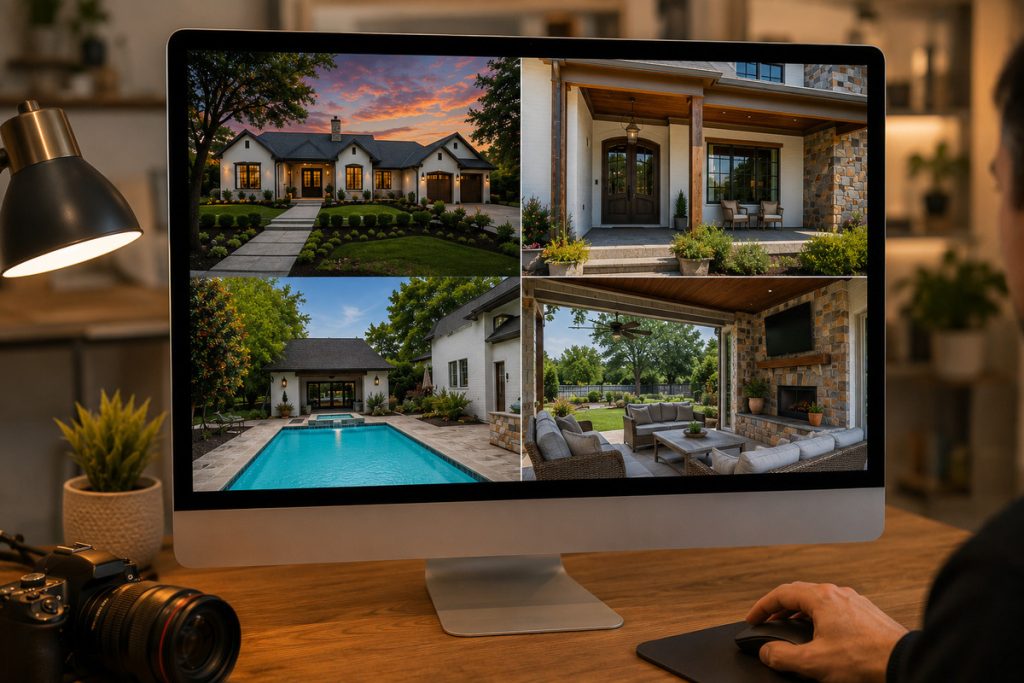
Listings with professional photography sell 32% faster, spending 89 days on market versus 123 days for listings without it.4 The same research found homes with professional photos get 61% more views online.
Since your flyer photos and your listing photos should be the same set, this is one investment that pays off across every channel. If your raw shots need work, AI-powered photo editing can turn them market-ready for less than a dollar per image, with turnaround measured in hours rather than days.
A few photo rules for print specifically:
- Use high-resolution images, at least 300 DPI at print size.
- Lead with the exterior or the home’s single best room.
- Skip photos of bathrooms and closets unless they’re a genuine selling point.
Writing Copy That Sells the Home, Not the Flyer
Keep the description under 200 words. Buyers won’t read more, and the space is better spent on photos anyway.
Write to the buyer this home actually fits. A starter home flyer should mention the school district and the fenced yard. A downtown condo flyer should mention the walk score and the building amenities. Generic copy that tries to appeal to everyone appeals to no one.
Cut the filler adjectives. “Stunning,” “charming,” and “must-see” tell buyers nothing. “Renovated kitchen with quartz counters and a gas range” gives them a reason to book a showing. Specifics sell; superlatives don’t.
How Do You Get Flyers in Front of Buyers?
Distribution decides whether your design work pays off. The highest-value placements are the ones closest to an interested buyer:
- Open houses: Every visitor should leave with one. It’s what they’ll reference when comparing homes later.
- Yard-sign boxes: Refill them. An empty flyer box next to a For Sale sign is a missed lead and a bad look for the seller.
- Neighborhood farming: Just Listed and Just Sold flyers mailed to the surrounding streets build your brand with future sellers, and ReSimpli’s flyer guide outlines formats for each of these use cases.5
- Digital versions: Attach the flyer PDF to your email list, post it to social, and hand it to co-op agents. One design, several channels.
Print costs are modest, so the real constraint is your workflow. Templates help you streamline this: build the layout once, then swap photos and details for each new listing.
Turn a Paper Flyer Into a Lead With a QR Code
A flyer’s biggest historical weakness was measurement. You printed 200 copies and hoped. QR codes fix that.
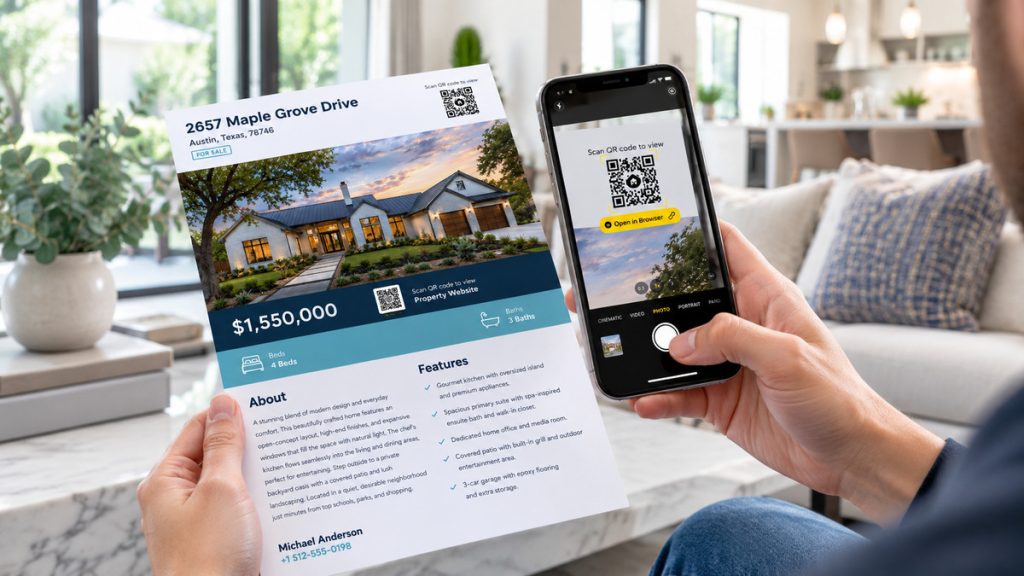
Put a QR code on every flyer that links to a single property website for the listing. Now the drive-by buyer who grabbed a flyer can scan it and land on the full photo gallery and virtual tour, then submit their contact information while they’re still parked outside. The paper handout becomes a lead-capture tool, and you can see exactly how many people scanned.
This is where AgentUp fits into the picture. AgentUp’s home flyers generate automatically from your property website, with a lead-capturing QR code built in, so the flyer, website, and tour all stay consistent without extra design work. For a closer look at how scans convert to leads, see our guide on using QR codes in real estate listings.
Showcase Every Property
Professional Flyers, Automatically
Generate branded real estate flyers directly from your listing.
Flyers Are a Small Investment That Compounds
A good real estate flyer costs a few dollars to design and print, and it keeps working after the open house ends. It sits in the buyer’s car, on their counter, in their folder of homes to reconsider. With professional photos, focused copy, and a QR code connecting print to digital, it earns its place in your listing marketing every time.
Ready to put your flyers to work? Create a free AgentUp account and generate market-ready real estate flyers for your next listing in minutes.
References: