


A $450K four-bedroom can hit the market the same week as two nearly identical homes a few blocks away, all running the same MLS-to-Zillow playbook. From a buyer’s screen, nothing tells the three listings apart.
That’s not a hypothetical. It happens on most streets, every week, and it costs more than most agents realize.
Single property websites fix what a standard listing can’t: leads routed elsewhere, selling points cut for space, a listing presentation that looks like everyone else’s. This piece breaks those costs down and shows what fixes each one.
What Counts as a “Standard” Listing (And Why It’s Working Against You)
A standard listing is whatever goes out the moment a property hits the MLS: the MLS entry, syndicated feeds to Zillow and Realtor.com, and maybe a PDF flyer. There’s no dedicated page anywhere that belongs to that specific property.
That setup isn’t broken so much as incomplete. The MLS exists to get a listing distributed to as many eyeballs as possible, not to sell it.
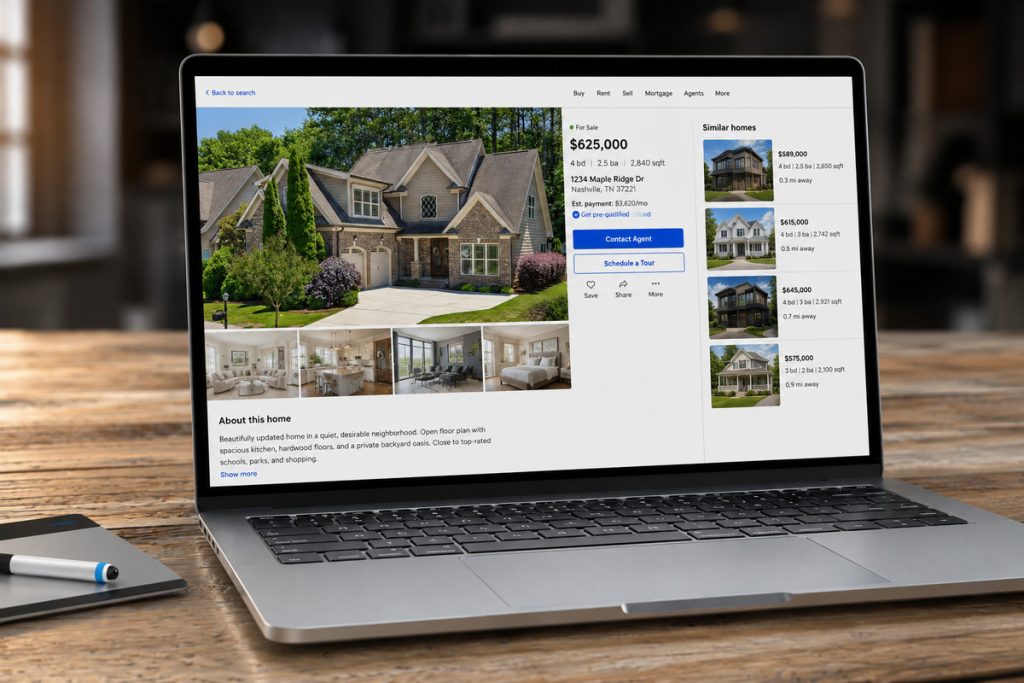
Once the data lands on a portal, you’re playing by that portal’s rules: its layout, its character limits, its ads, its lead-routing logic. None of it was built for you. It was built for the portal’s business model.
None of that shows up when you’re setting up the listing. The entry looks complete, the syndication confirmation comes through, the portal listing goes live within a day or two.
Everything appears to be working.

The costs show up later: leads that never call back, a listing description that reads like a summary of a summary, and a listing presentation that sounds like the pitch the seller already heard from the last three agents.
That gap between “the listing is technically live everywhere” and “the listing is actually working for the agent who won it” is where the next five sections live:
- Where buyer inquiries actually go once they click “Contact Agent”
- What the MLS remarks field won’t let you say about the property
- Who else is advertised on the same page as your listing
- What you have to show a seller in the listing presentation
- Whether you can tell who’s interested before a showing gets booked
Each one is a specific, fixable gap. The rest of this piece goes through them in order.
Where Does the “Contact Agent” Click on Your Listing Actually Go?
Often, not to you. On Zillow, the “Contact Agent” button is frequently tied to the Premier Agent program, which sells lead placement by ZIP code. A buyer who clicks it may reach an agent who bought that ZIP code, not the one who actually took the listing.
Most buyers have no idea this is how it works. A 2026 controlled study by Wharton marketing professor Jerry Wind found that only a tiny fraction of Zillow users correctly understood that “Contact Agent” wouldn’t connect them with the listing agent.1 Nearly everyone else assumed it would.
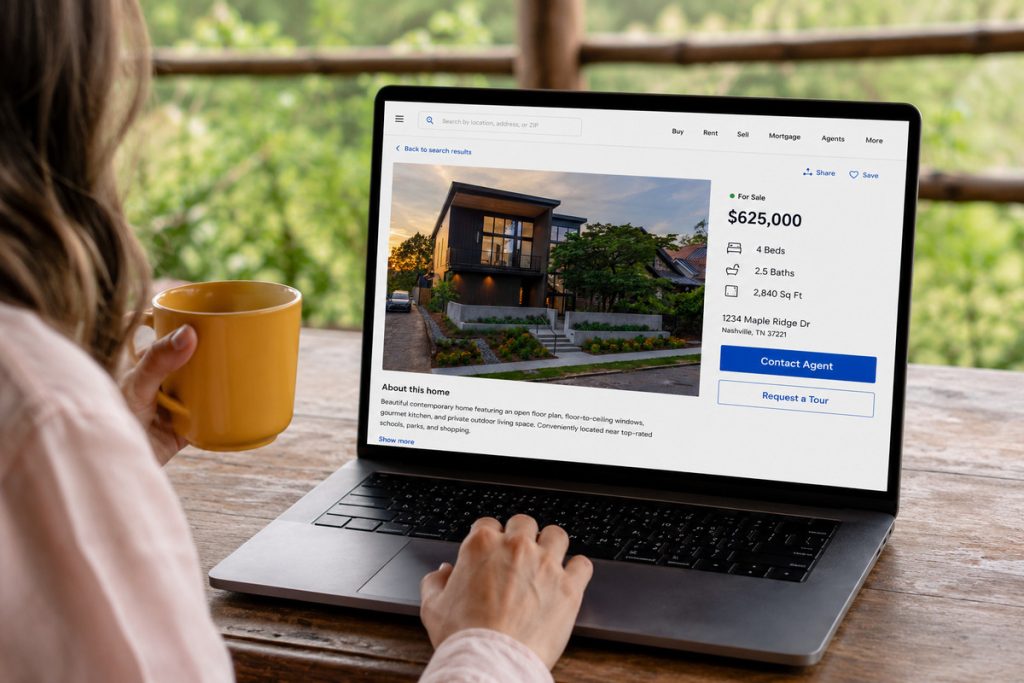
Zillow’s own Premier Agent training materials confirm the mechanism: leads get routed to whichever agent purchased that ZIP code, regardless of who holds the listing.2 The setup is now the subject of active litigation over whether it misleads consumers.3
Run that forward across a listing’s lifespan. Every buyer who scrolls past your sign, likes what they see, and clicks “Contact Agent” is a lead you generated through your own marketing. If that click gets rerouted, the work is still yours. The lead isn’t.
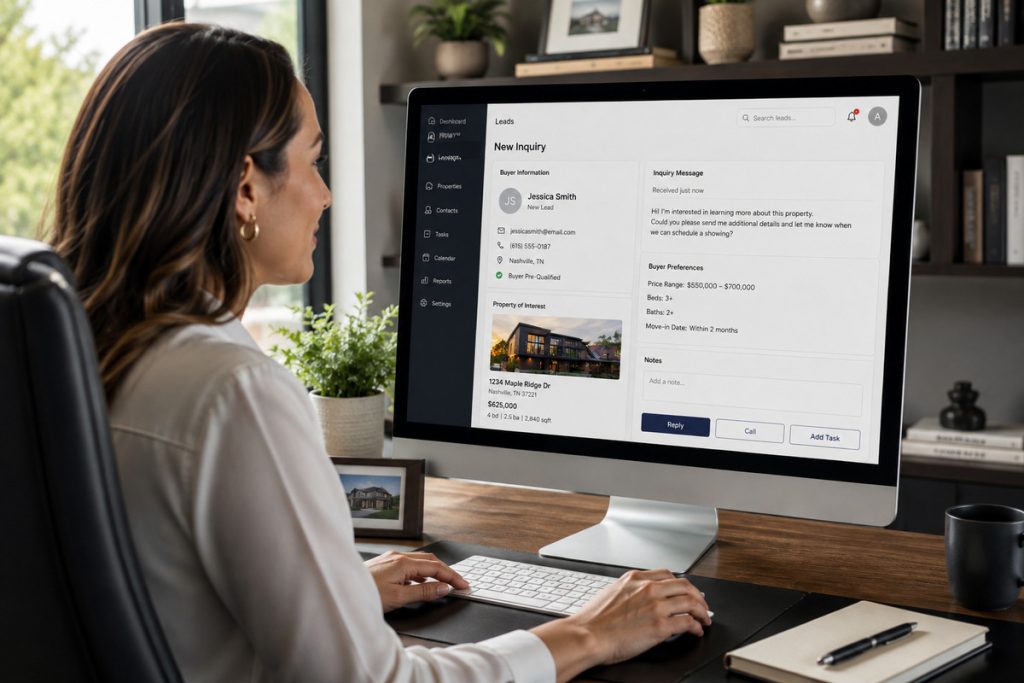
A listing that stays active for three or four weeks can generate dozens of those clicks. With single property websites, those buyers stay focused on the property instead of being redirected to competing listings.
For the agent who did that work, this matters more than it sounds like it should. Every inquiry routed to a Premier Agent competitor isn’t just a missed showing. It’s a client relationship, and the referral that would have come from it, that never gets a chance to start.
Your Next Listing Starts Here
Stand Out With Single Property Websites
Create stunning listing websites that showcase homes and strengthen your brand.

What Your MLS Remarks Field Won’t Let You Say
Not much, once you get past the basics. Public remarks fields are capped, and the cap varies by board: Bright MLS and Northwest MLS run around 1,000 characters, FMLS is tighter at roughly 800, CRMLS gives you around 1,500, and HAR is one of the more generous boards at about 2,000.
Exact limits shift as boards update their systems, so treat these as a general picture rather than a live number. Listingkit has a rundown by board if you want to check your own.4
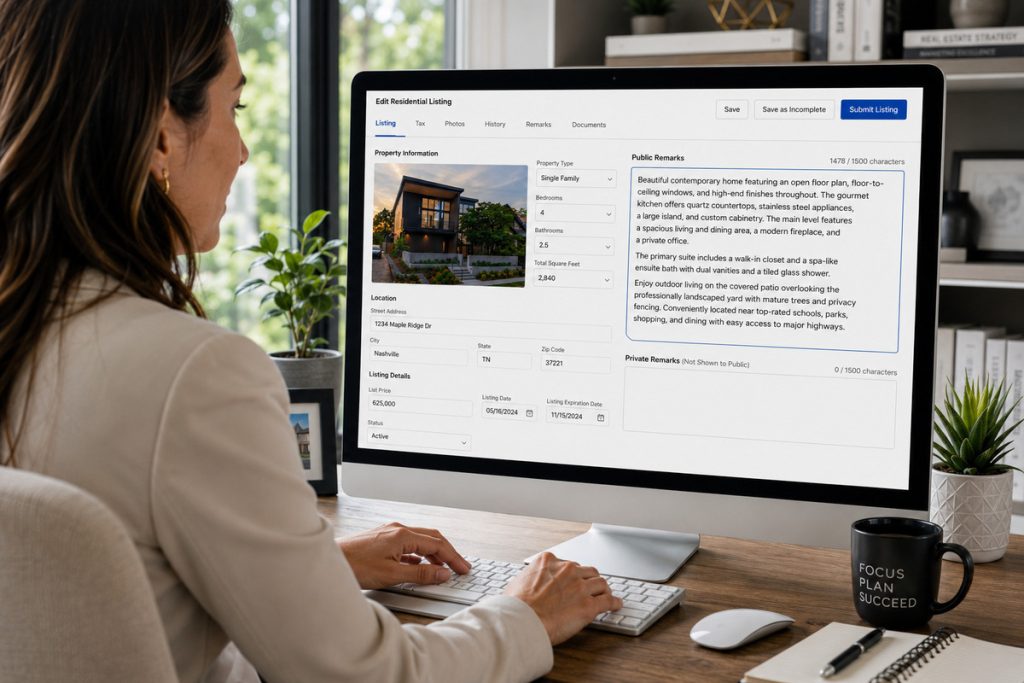
Whatever the number, it’s rarely enough to cover a full listing. A four-bedroom with a renovated kitchen, a finished basement, and a walkable location doesn’t fit in 800 to 1,500 characters without cutting something a buyer might have cared about. The first things to go are usually the ones that take the most words to explain:
- What was actually renovated, and when
- School zone and walkability details a buyer would otherwise have to research separately
- HOA terms, special assessments, or anything with a caveat attached
- The neighborhood context that turns “four bedrooms” into “four bedrooms two blocks from the elementary school everyone wants”
Portals often trim further on top of the MLS limit, so what displays on a buyer’s phone can be shorter still. The result reads less like a description and more like a summary of a summary: “4BR/2.5BA, updated kitchen, finished basement, must see.” Every word is true. None of it says why this house is worth stopping for.
A dedicated page doesn’t have that problem. There’s no character cap on room-by-room detail or neighborhood context. The same kitchen that got reduced to “updated kitchen” can get an actual paragraph, with the brand of the appliances, the year of the renovation, and why it matters.
Why Your Listing Page Is Also Advertising Your Competition
Because the portal built it that way. Zillow, Realtor.com, and similar sites place agent ads, “similar homes” modules, and Premier Agent widgets directly on the same page as your listing. A buyer looking at your $450K four-bedroom is one scroll away from three other agents’ headshots and a list of comparable homes.
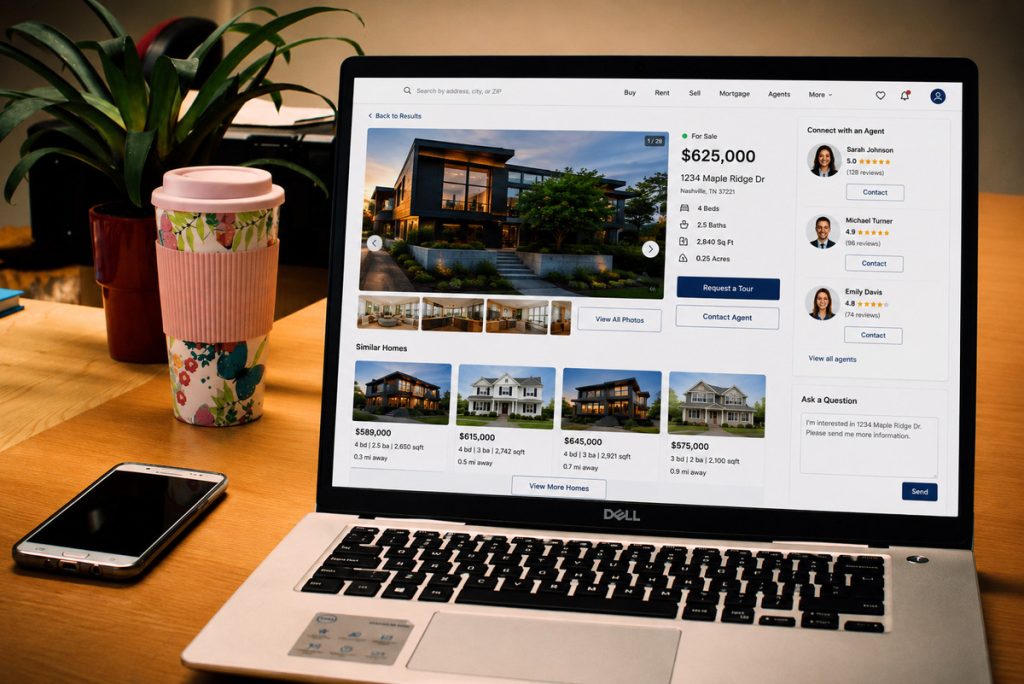
You don’t control that layout, and you never will. It’s the portal’s website, and its business model depends on buyers browsing and clicking ads rather than converting quickly on one property. Your listing converting fast works against that.
Think about what a seller would say if they understood this. They hired you to market their home, not to help a competing agent’s ad reach the exact buyer pool your marketing generated. But that’s functionally what happens on a portal page.
Single property websites have one job: sell this house. Unlike listing portals, there’s no rival agent’s headshot competing for attention or “homes you may also like” carousel pulling buyers elsewhere. The whole page works for the property it was built for.
You Only Get One Shot at the Listing Presentation. What Are You Bringing to It?
Usually just one, and that’s not a guess. NAR’s Profile of Home Buyers and Sellers has repeatedly found that a large share of sellers, commonly cited around 80% in the 2025 edition, contact only one agent before signing a listing agreement.5

If you’re citing this figure yourself, pull the exact number from your NAR membership access, since the wording varies across secondary write-ups of the report.
That number changes what a listing presentation is actually for. It’s not one round in a multi-agent bake-off where your track record can do the talking. For most sellers, it’s the only pitch they’ll see, and it needs to look like something the next agent couldn’t put together by lunchtime.
This is where single property websites earn their place: not as a slide describing your marketing plan in the abstract, but as the plan itself, already built with the seller’s actual address on it.
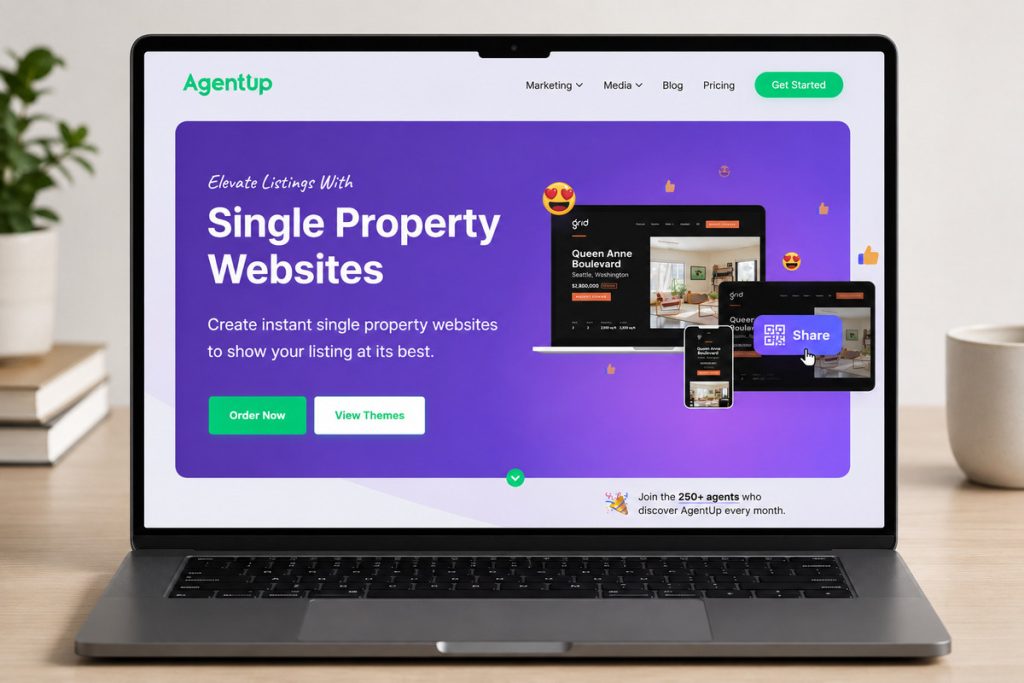
Some solo agents in competitive suburban markets build this into every listing: a site goes live before the sign goes in the yard, ready to walk sellers through it at the listing appointment. It’s also the one link they hand a buyer afterward that doesn’t send that buyer somewhere else.
The seller doesn’t need to imagine what your marketing will look like. They’re already looking at it, on their own screen, with their own address in the header.
That’s a different conversation than a printed pre-listing packet or a generic slide deck, which only describe what you’ll do once you get the listing. A live site with the property’s actual photos has already been done. It’s the difference between telling a seller you have a plan and putting it in front of them.
Why You Have No Idea Who’s Actually Interested Until They Book a Showing
Because a standard listing gives you almost no visibility into what happens before that. MLS syndication doesn’t report who viewed your listing or which photos they looked at twice. Portal-side analytics, where they exist at all, usually belong to the portal, not to the agent accountable for selling the house.
That leaves agents guessing. By the time showing requests come in, you may have already missed interested buyers. A single property website lets you track engagement, spot interest early, and update sellers with real numbers.
That data changes what you do with it, too. A weekend spike tells you it’s worth pushing a fresh round of social posts while attention is high. A steady trickle with almost no return visits might mean the price needs a second look.
Your Next Listing Starts Here
Stand Out With Single Property Websites
Create stunning listing websites that showcase homes and strengthen your brand.
What Single Property Websites Actually Fix, Point by Point
Here are the same five problems, matched to what changes when the listing has single property websites behind it.
| The problem | What it costs you | What a single property website fixes |
|---|---|---|
| Contact Agent routing | Buyer inquiries reach a paid competitor instead of you | The site’s contact form and calls route straight to you, no ad-driven routing |
| MLS character limits | Key selling points get cut before a buyer ever sees them | No character cap, room for full detail, story, and neighborhood context |
| Competitor ads on the listing page | Buyer attention gets pulled toward rival agents and other homes | A page built around one property, with nothing else competing for the click |
| The listing presentation | Nothing to show a seller that looks different from any other agent’s pitch | A live, seller-specific site you can walk through in the appointment |
| No visibility into interest | You find out a listing is working only after a showing gets booked | Page views and engagement data show interest as it happens |
The pattern across all five rows is the same. A standard listing runs on infrastructure someone else built for their own purposes: ad revenue, a data standard, or ZIP-code sales. The best single property websites are built for one purpose: selling a specific home.
Is a Single Property Website Worth It for Every Listing?
Not automatically, and it’s worth being straight about that. The “this is just a luxury listing thing” assumption is common, and it’s outdated. The power of single property websites applies just as much to a $300K starter home as it does to a $3M estate.
A buyer scrolling Zillow doesn’t treat a mid-market listing more generously because the price is lower, and a seller interviewing agents for that starter home asks the same “what makes you different” question a luxury seller asks.
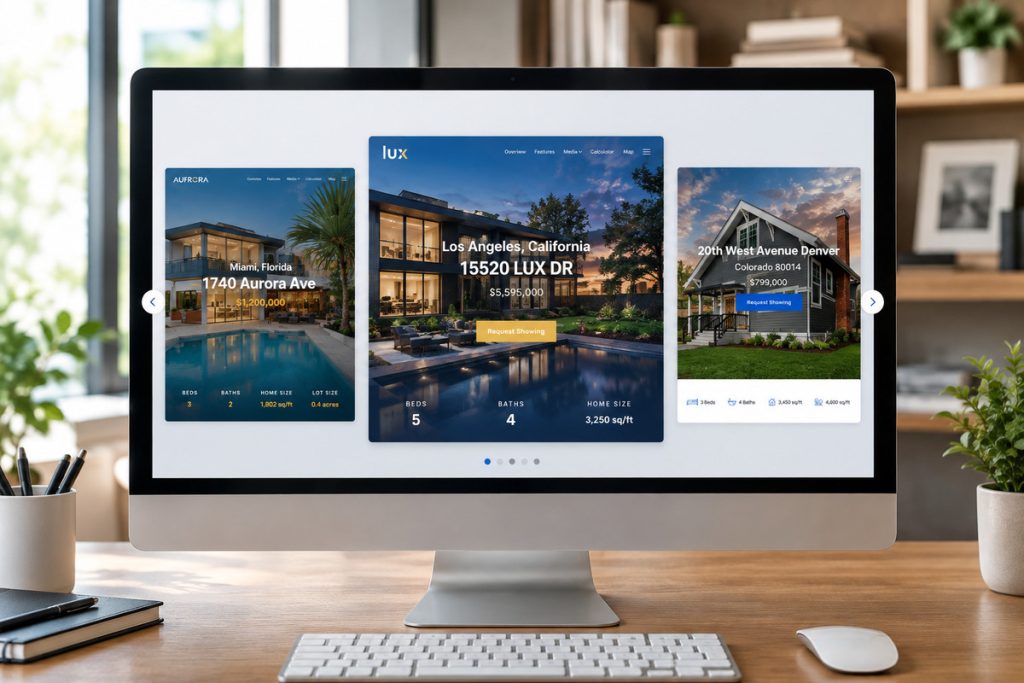
Where it may genuinely not be worth the setup time: a listing you’re confident will be under contract within days, in a pocket where multiple offers are close to guaranteed. If the home will sell itself in 72 hours no matter what, the extra step may not pay off. That’s a real exception, not a hedge.
For everything else, especially anything expected to sit for more than a week or two, the case holds. It’s the same logic AgentUp has laid out for why luxury listings benefit from a dedicated site. That reasoning just isn’t limited to the high end.
A useful way to think about it: the setup takes minutes, not days, so time isn’t really the obstacle. The real question is whether you’re confident enough in a fast sale that the extra visibility and lead routing simply won’t matter. For most listings, that confidence isn’t there until after the fact.
Give Your Next Listing a Page That Works for You, Not the Portal
Every listing already gets an MLS entry and a portal syndication. That part isn’t optional, and it doesn’t need to be.
What’s optional is whether it also gets a page that routes leads to you instead of a competitor, says everything you need it to say without a character cap, keeps rival agents off the page, and doubles as your listing presentation.
Your Next Listing Starts Here
Stand Out With Single Property Websites
Create stunning listing websites that showcase homes and strengthen your brand.
A QR code for the yard sign closes the loop between the buyers walking the neighborhood and the site built to convert them. Point it straight at the property page instead of a generic search portal, and every walk-by becomes a lead you can actually track.
Build your first single property websites for free. AgentUp’s free plan comes with a $5 site credit, so you can put your next listing on its own page before you decide whether to make it a habit.
References: