


A lot of agents have a QR code on their yard signs by now. It’s on the flyers too, maybe the business card. But if you asked how many leads that code actually generated last month, could you answer with a number, or just a shrug?
Few agents can answer that with a number.
That’s the gap between using QR codes in real estate marketing and using them well. The code itself doesn’t do much on its own. What it points to, whether it’s tracked, and whether it gives buyers a reason to scan is where the results actually come from.
Why QR Codes Are Worth Getting Right
QR codes matter because buyers are already on their phones before they ever call an agent. According to NAR’s 2024 Profile of Home Buyers and Sellers, 69% of buyers used a mobile or tablet device somewhere in their home search, and 51% found the home they eventually bought online.1
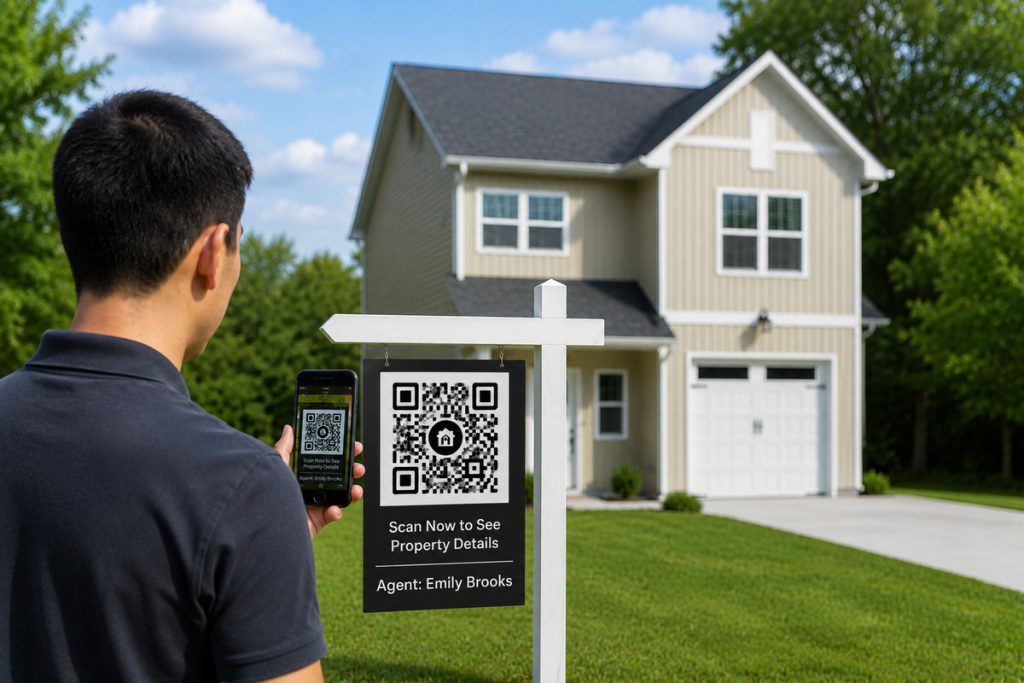
Agents are leaning into that shift too. NAR’s Real Estate in a Digital Age report found 75% of members use social media and 52% use drone photography or video in their business, so a scannable code is a natural extension of marketing buyers already expect.2
Set up correctly, the payoff shows up in the numbers. Bitly’s 2026 QR code data shows QR-initiated customer journeys convert at an average 37% click-through rate, more than ten times the 2-5% CTR typical of digital display ads.3 That’s a meaningful gap for agents deciding where to put a limited marketing budget.
Common QR Code Mistakes That Are Costing Agents Leads
QR codes in real estate marketing can scan perfectly and still fail to generate a single lead. Here’s why.
Linking to the Wrong Destination
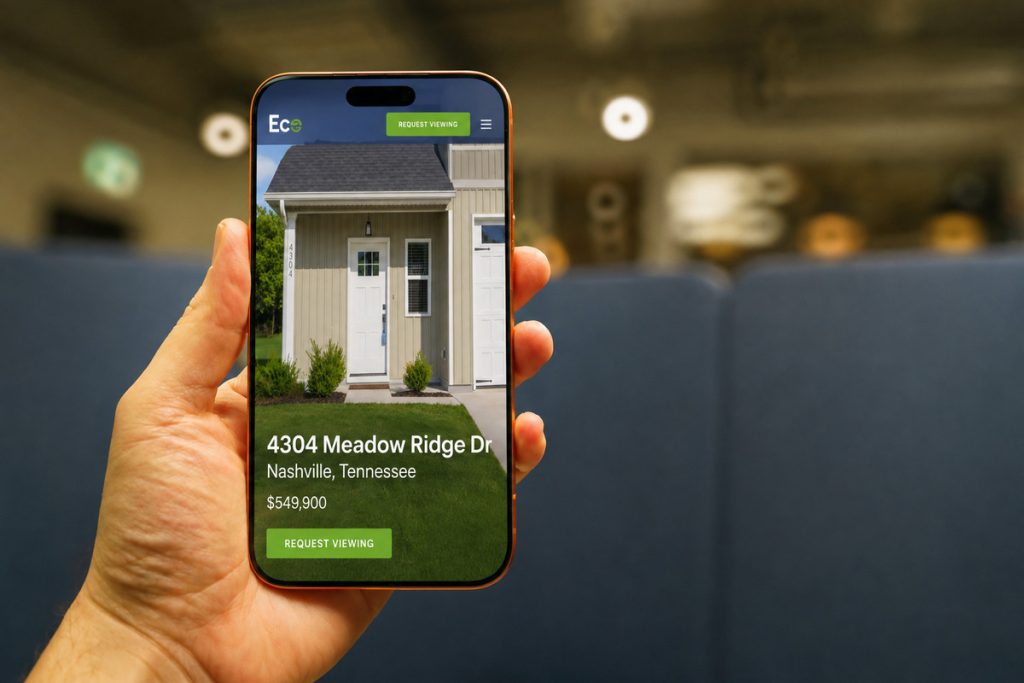
A code that sends buyers to the brokerage homepage or a generic MLS search page wastes the scan. Someone standing in front of a specific house wants details on that house: photos, price, square footage, a virtual tour, not a search bar they have to use all over again.
Link the code to a dedicated property page instead. AgentUp’s guide on how to use QR codes in real estate listings like a pro walks through what that page should include.
Using Static Codes for Listings That Change
Static QR codes lock in one destination the moment they’re generated. That’s a problem in real estate, where a listing moves from active to pending to sold in a matter of weeks, and a static code printed on a sign rider can’t be redirected once the house is under contract.
Dynamic codes solve this. Bitly’s guide to QR codes for realtors breaks down the difference in plain terms: a dynamic code lets you change where it points without reprinting anything, so the same sign rider can serve one listing after another.4
No Clear Call to Action
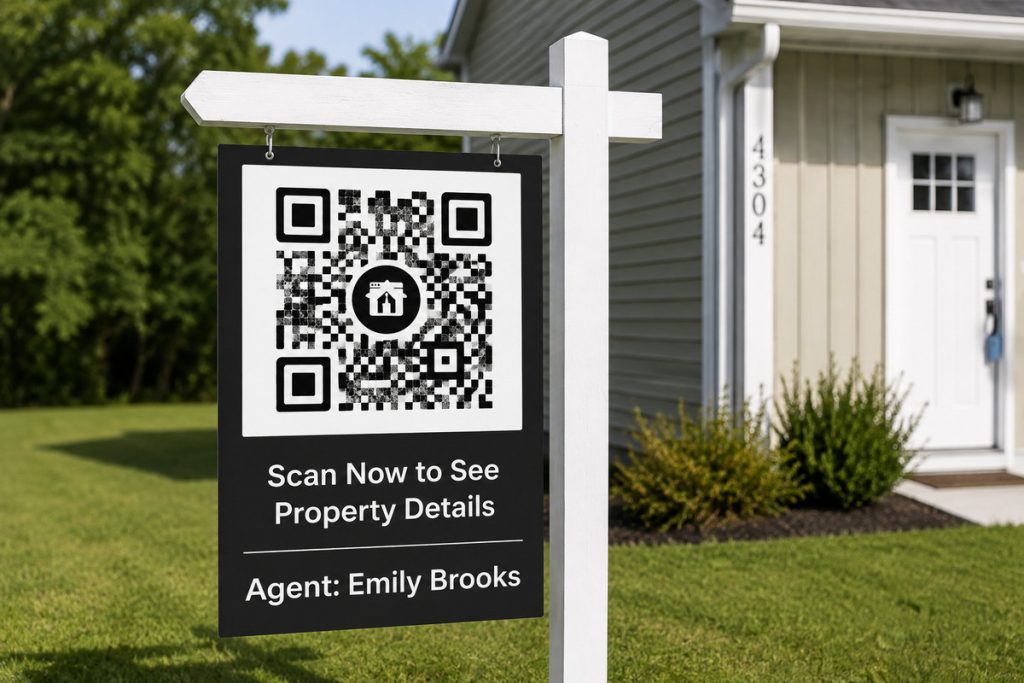
A code with no explanation next to it asks buyers to guess what they’ll get. “Scan for more photos,” “scan to book a tour,” or “scan for the current price” all set expectations before someone even pulls out their phone. AgentUp’s piece on using QR codes to capture more buyer leads covers CTA phrasing that tends to hold up well.
That one line next to the code often decides whether it gets scanned at all.
Skipping Analytics and Tracking
Print marketing is hard to measure by nature. A yard sign doesn’t tell you how many people slowed down to look at it. QR codes in real estate marketing fix that, but only if the code is set up to track scans in the first place.
Without tracking, there’s no way to know which signs, flyers, or listings are actually generating interest. AgentUp’s rundown of QR code marketing benefits agents should know covers what that visibility looks like, including how it helps justify marketing spend to sellers.
Capture More Buyer Leads
QR Codes Built Into Every Listing
Connect buyers to listings, tours, and property websites with a simple scan.

Making the Code Too Small or Poorly Placed
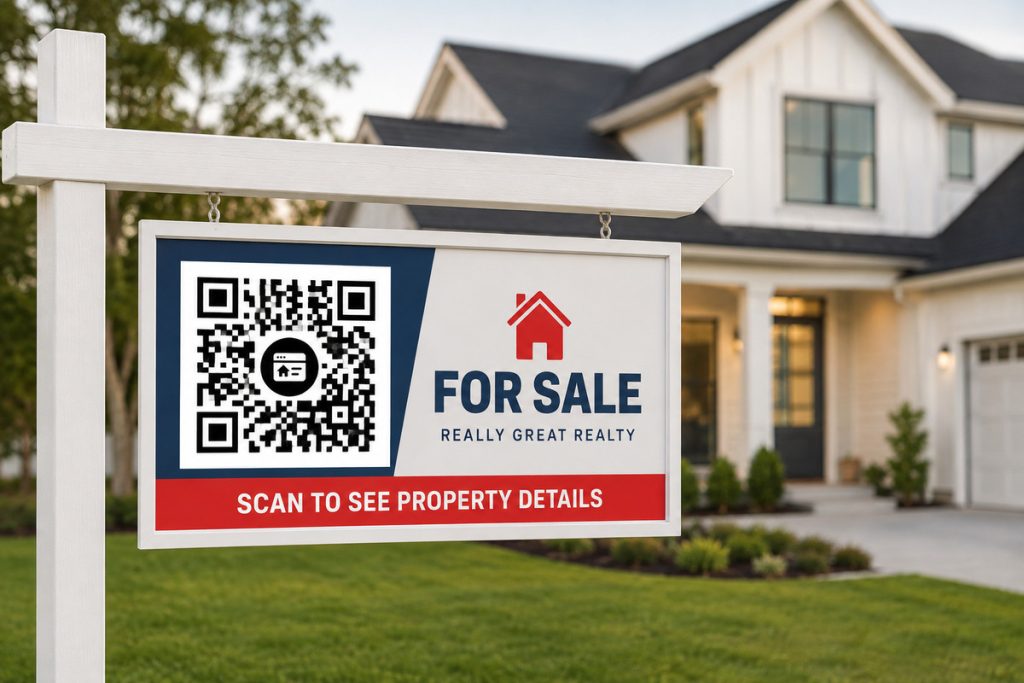
A QR code needs to be at least about an inch wide to scan reliably from a normal distance, with decent lighting and contrast behind it. A code shrunk into the corner of a flyer or printed in low-contrast colors is hard for a phone camera to pick up, especially outdoors at dusk.
Placement matters just as much. AgentUp’s article on how QR codes on real estate signs turn a quick look into a property tour covers sign height and positioning for drive-by scans specifically.
What the Right Way Actually Looks Like
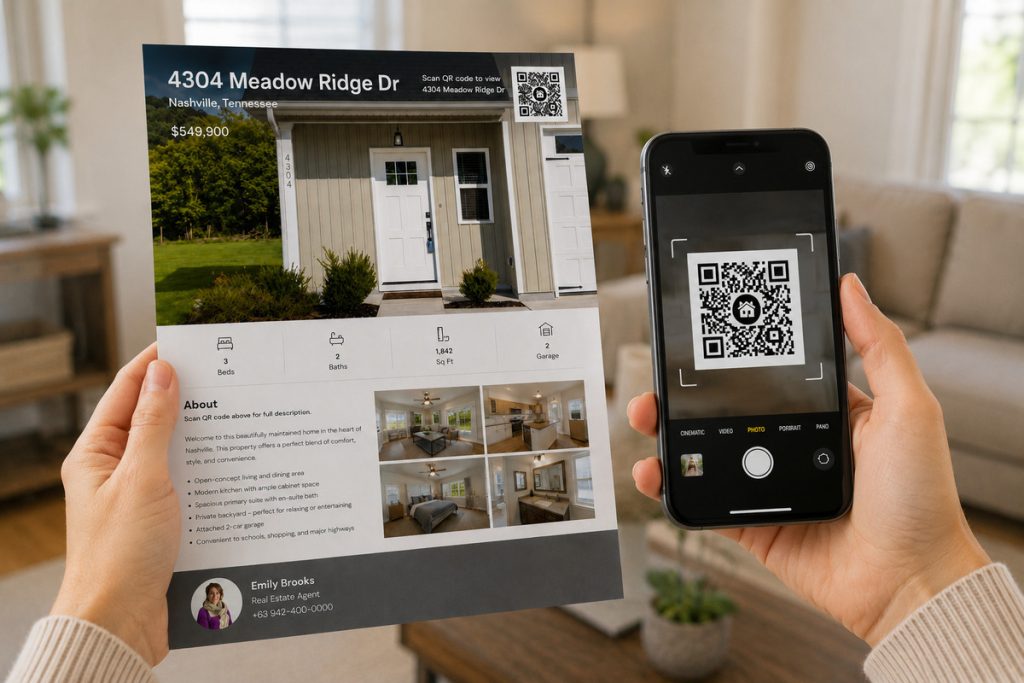
Put together, the fixes above add up to one standard: every QR code should point somewhere specific, updateable, and trackable, with a clear reason to scan attached.
The results back this up. One case study tracked by RSP USA found a home value estimate QR code converting 13.6% of scans into listing leads, about five times the national average.5 That kind of return comes from linking to something specific and useful, not a generic homepage.
None of this requires much extra effort once it’s part of the workflow. It just has to be intentional from the start.
Quick Self-Audit: Is Your QR Code Strategy Working?
Run through these questions for any QR codes in real estate marketing you’re currently using.
| Does it link to a dedicated page for that listing, not a generic homepage or search page? |
| Is it a dynamic code you can redirect without reprinting? |
| Is there a clear call to action printed next to it? |
| Can you see how many scans it’s gotten, and from where? |
| Is it printed large enough and placed where people will actually notice it? |
If several of those answers are no, that’s not a reason to drop QR codes from the marketing mix. It’s a reason to rebuild the ones already in circulation.
Where AgentUp Fits In
Fixing these issues one at a time is manageable, but it’s faster with tools built for it. AgentUp’s single property websites give every listing its own dedicated, mobile-friendly page in a few minutes, and AgentUp’s QR codes connect directly to that page by default. Redirect the code the moment a listing goes pending, and every scan gets logged automatically. The home flyers built on AgentUp come with that same QR setup baked in.
That combination checks off most of the self-audit above before you’ve done any extra setup.
Capture More Buyer Leads
QR Codes Built Into Every Listing
Connect buyers to listings, tours, and property websites with a simple scan.
If your current QR codes are pointing at outdated pages or nothing you can measure, that’s worth fixing before your next listing goes live.
Explore AgentUp’s marketing tools to see how a property website and a QR-ready flyer come together in one workflow.
References: