


When a buyer slows down in front of your yard sign, they have their phone out. That moment — curiosity, phone in hand — is your best shot at capturing them as a lead. Most agents let it slip by because their sign only has a phone number and an agent photo.
QR codes change that dynamic. A single scan takes a buyer from a sign, flyer, or open house table directly to a full listing, virtual tour, or contact form — before they’ve made a single phone call.
This guide covers the most effective ways to use QR code real estate marketing to drive buyer engagement — from yard signs and open houses to flyers and property websites — and how to make each touchpoint work harder for your listings.
Why QR Codes Work in Real Estate Marketing
Buyers do most of their home research on mobile. According to the NAR’s 2024 Profile of Home Buyers and Sellers, 69% searched for homes on a mobile device or tablet.1 They want information fast, and they want it without friction.
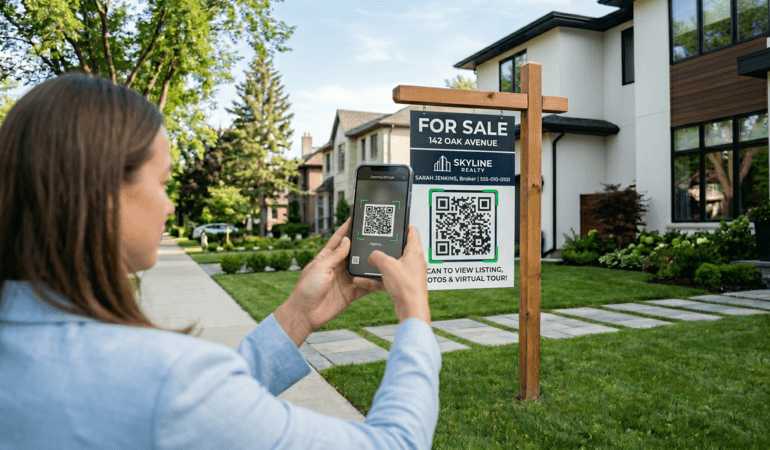
That’s where QR codes have a practical edge. Instead of asking a buyer to type in a URL or remember to Google your listing later, a QR code gets them there instantly. The scan-to-destination journey is short enough that buyers actually complete it — which is why QR codes deliver an average click-through rate of 37%, compared to 2–5% for typical display advertising.2
For real estate agents, that engagement gap matters. Every piece of print marketing you put out is a potential lead source — but only if buyers have somewhere to go when they’re interested.
Where to Use QR Codes in Your Listing Marketing
Yard Signs and For-Sale Signage
The yard sign is often the first touchpoint a potential buyer has with your listing. Adding a QR code turns it from a passive display into an active lead capture tool.
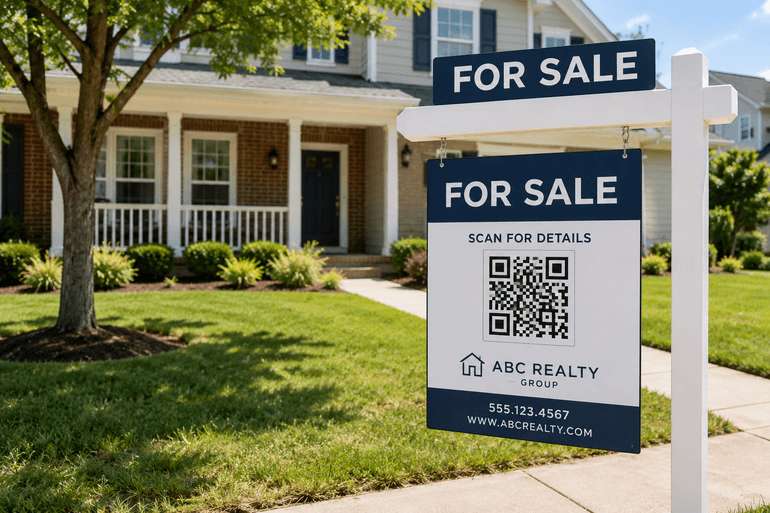
A well-placed QR code on a sign can link to a full listing with professional photos, a floor plan, and a contact form. Buyers who are browsing neighborhoods on foot or driving through can scan and get the full picture without calling — and you have their engagement tracked.
Scan data from dynamic QR codes also tells you when interest is highest, so you can time follow-up outreach or adjust your open house schedule accordingly.
Listing Flyers and Print Marketing
Print marketing without a digital component is a dead end. A buyer picks up a flyer, reads it, and sets it down — you have no way to know they were interested and no path to follow up.
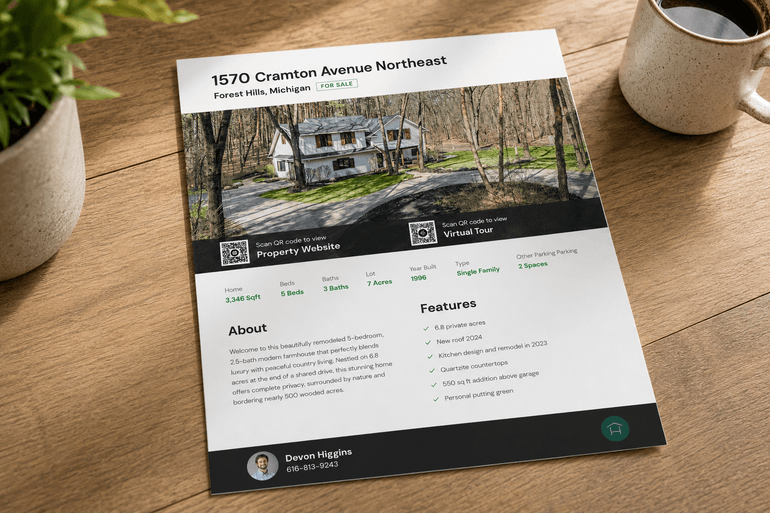
Add a QR code to your listing flyers and that changes. The flyer becomes a bridge to your property website, virtual tour, or lead capture page. AgentUp home flyers include QR codes by default, so every flyer you print is already connected to your listing’s digital presence.
Open Houses
Open houses give you face-to-face time with buyers, but the data you collect is usually thin — a paper sign-in sheet with a name and email if you’re lucky.
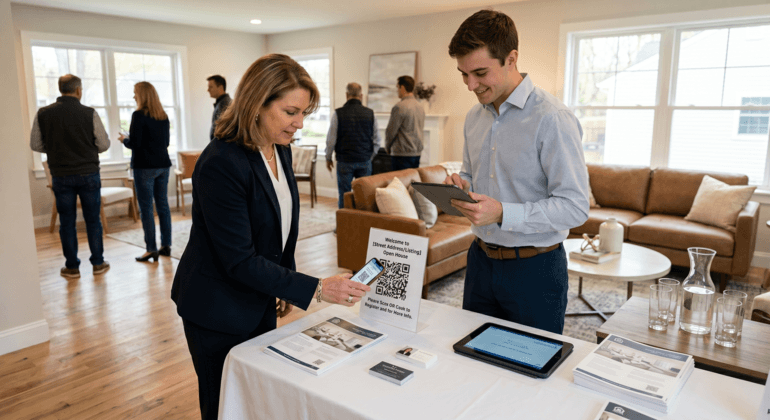
QR codes at your check-in table make the process faster and more effective. Buyers scan to register, which captures their contact info cleanly and can prompt them to visit the listing website or leave feedback. Open houses using QR codes for check-ins collect 50% more attendee information than traditional sign-in methods.3 That’s a meaningful difference when you’re trying to build your follow-up list.
Single Property Websites
A QR code is only as good as where it takes the buyer. Linking to a generic MLS page or a busy brokerage site dilutes the experience. The stronger move is to link directly to a single property website built around that specific listing.

A dedicated property site gives buyers everything in one place — photos, a full description, a virtual tour, and a clear way to contact you. When buyers arrive from a QR scan, they’re already interested — your job is to make sure the destination earns that interest.
Virtual Tours
Adding a virtual tour link to your QR code is especially effective for out-of-town buyers or anyone who can’t attend an open house. A buyer who’s been driving past a property can scan the yard sign code, immediately launch an immersive tour, and decide whether it’s worth scheduling a showing.
This is one of the faster ways to filter serious buyers from casual ones and to keep your listings competitive in markets where buyers are making decisions quickly.
Social Media and Email
QR codes aren’t limited to print. Including them in your email signature, Instagram stories, or digital ads creates a quick path to a specific listing for buyers who are already engaged with your content.

For agents running any kind of digital marketing campaign around a new listing, QR codes bridge the gap between social awareness and direct action.
What Buyers Think of QR Codes in Property Marketing
Buyer reception to QR code real estate marketing has shifted significantly. According to QR Tiger, 73% of buyers found QR codes on property signage “helpful” or “very helpful” in their home search.4 That number is highest among buyers under 45, who increasingly expect to access full property details on their phone before speaking with an agent.
The practical implication: using QR codes is less of a differentiator and more of a baseline expectation, particularly in competitive markets where buyers do thorough research before making contact.
Capture More Buyer Leads
QR Codes Built Into Every Listing
Connect buyers to listings, tours, and property websites with a simple scan.

How to Track Your QR Code Real Estate Results
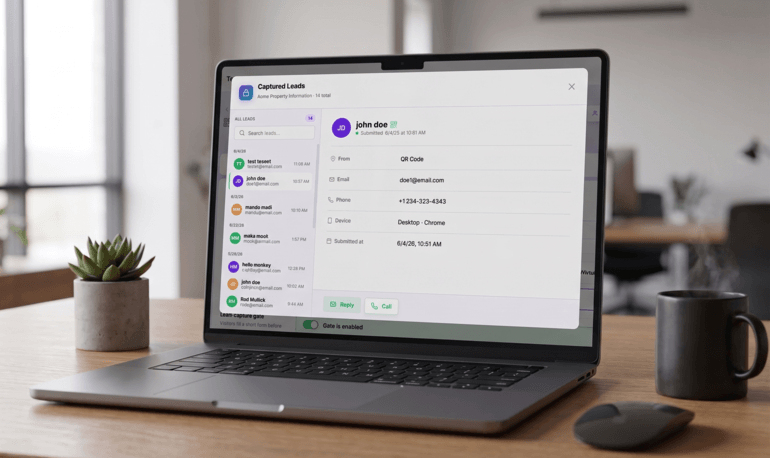
One of the clearest advantages of dynamic QR codes over static ones is tracking. With a dynamic code, you can see total scans and when they happened, device type, location data (useful for multi-market agents), and conversion from scan to lead form submission.
This data gives you a clearer picture of which marketing materials are actually driving interest. If your yard sign QR code is getting 40 scans a week but your flyer code gets 3, you know where buyer attention is — and can allocate budget accordingly.
Tracking also helps you identify when your destination page needs work. High scans with low lead conversions usually points to a weak landing page, not a lack of buyer interest. According to Bitly’s real estate QR code guide, agents who use QR codes with consistent tracking refine their marketing faster than those who rely on print metrics alone.5
A Simple QR Code Workflow for Your Listings
Adding QR codes to your marketing doesn’t require a complicated setup. Here’s a practical starting point:
1. Create your digital destination first — a property website, virtual tour, or landing page
2. Generate a dynamic QR code linked to that destination
3. Test the scan on multiple devices before printing
4. Add to your sign riders, flyers, and open house materials
5. Monitor scan data and compare performance across listings
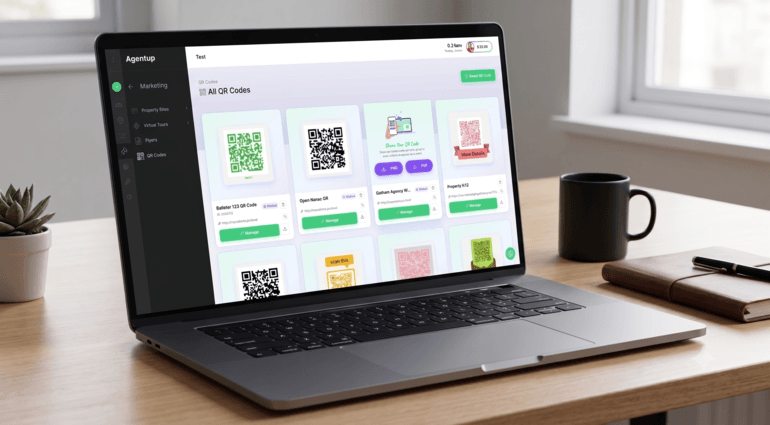
AgentUp generates QR codes automatically as part of every property website and flyer. There’s no separate tool to manage — the code is built in and linked to your listing’s dedicated page from day one.
Common Mistakes to Avoid
Linking to a generic page. A QR code that takes buyers to your homepage or a general listings search loses most of its value. Every code should link to a specific, relevant destination.
Using static QR codes. Static codes can’t be updated after printing. If the destination URL changes, the code becomes useless. Dynamic codes let you update the destination without reprinting materials.
Poor placement or sizing. A code that’s too small, too low-contrast, or in a spot where buyers can’t comfortably scan it won’t get used. Test your placement before going to print.
No mobile-optimized destination. If a buyer scans a code on their phone and lands on a page that doesn’t render well on mobile, they’ll leave immediately. Every destination linked through a QR code should be built for mobile first.
One Scan Away From a Lead
Capture More Buyer Leads
QR Codes Built Into Every Listing
Connect buyers to listings, tours, and property websites with a simple scan.
QR codes are a low-effort, high-return addition to your listing marketing workflow. They connect your print materials to your digital presence, give buyers the instant access they expect, and give you the lead data you need to follow up effectively.
The agents who use them well aren’t doing anything complicated — they’re just making sure every physical marketing touchpoint has a clear path to engagement.
If you want to add QR codes to your listings without the manual setup, AgentUp’s marketing tools include automatic QR code generation for property websites, virtual tours, and printed flyers.
References: