


Today’s buyers scroll through dozens of listings before requesting a showing. When they come across a vacant property with bare walls and empty floors, it can be difficult to imagine how the space would look and function as a home.
As a result, some buyers move on before fully considering the property. That’s not necessarily a reflection of the home itself—it’s often a presentation challenge that AI virtual staging for real estate can help solve.
By digitally furnishing empty rooms, virtual staging gives buyers the context they need to visualize a property’s potential. This article explores why vacant spaces can limit buyer engagement and how virtual staging helps create stronger first impressions.
Why Empty Rooms Are a Harder Sell Than You Think
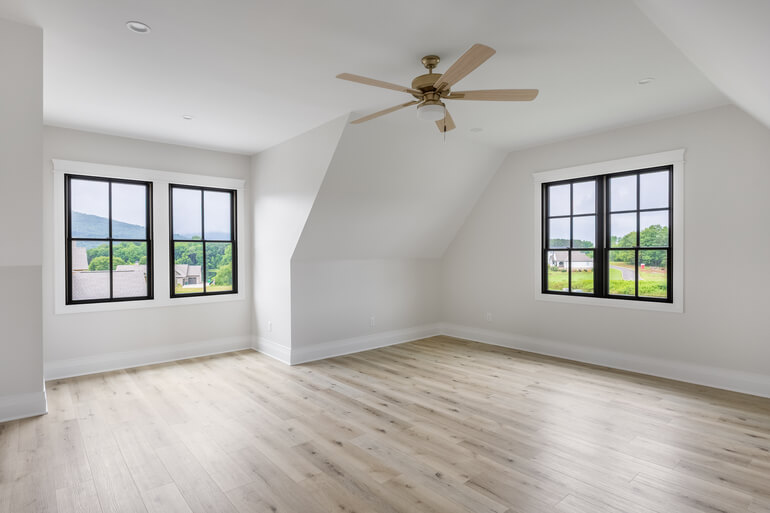
Buyers make fast decisions online. Before they ever walk through a front door, they’ve already formed an opinion based on listing photos. An empty room gives them very little to work with.
According to the NAR’s 2025 Profile of Home Staging, 83% of buyers’ agents say staging helps buyers visualize a property as a future home.1 That’s not a small margin — it reflects a genuine gap in how buyers experience unfurnished spaces.
The same report shows a significant shift in how buyers search: in 2025, buyers viewed a median of 20 homes online before touring just 8 in person. The online listing is now the first showing. If the photos don’t engage, you don’t get the in-person visit.
Empty rooms also tend to look smaller than they are. Without furniture to establish scale, buyers have no reference point for whether a room actually fits their needs. What’s a comfortable living room in reality can look like a cramped box in photos.
What AI Virtual Staging for Real Estate Actually Does
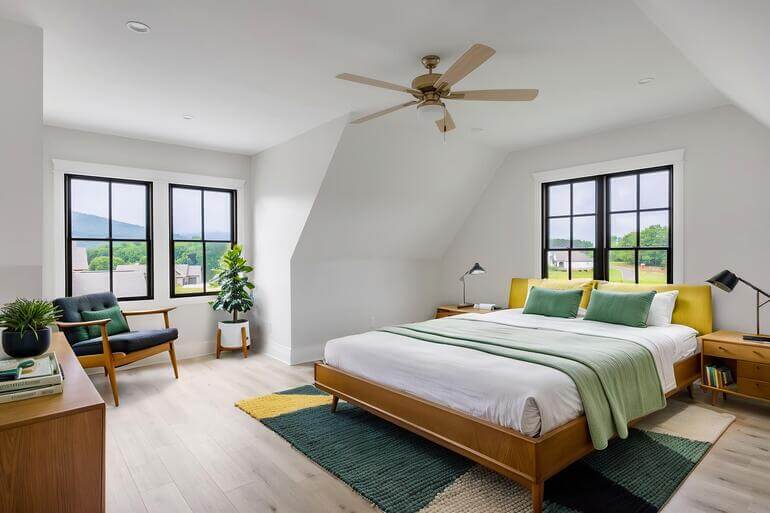
AI virtual staging uses artificial intelligence to add photorealistic furniture and décor to photos of empty rooms — no moving trucks, no rental fees, no scheduling headaches.
You upload a photo, select a room type (living room, bedroom, kitchen, and so on), choose a design style, and receive fully rendered images. The result looks like a professionally furnished space, built entirely in post-production.
The practical advantage is significant. Traditional home staging can cost thousands of dollars per listing 2 — often $1,500 to $3,000 or more when you factor in furniture rental, delivery, and setup. AI virtual staging costs a fraction of that, with some platforms delivering polished results for under $10 per image, and most professional services pricing between $5 and $50 per render.
AgentUp’s AI Virtual Staging delivers three photorealistic renders per image, with five interior design styles to choose from, starting at $5 per image. It’s built specifically for agents who need quality results without slowing down their listing workflow.
Quick & Easy
AI Virtual Staging
Interiors. Landscapes. Commercial. Virtually transform any space.

How Virtually Staged Photos Change Buyer Behavior
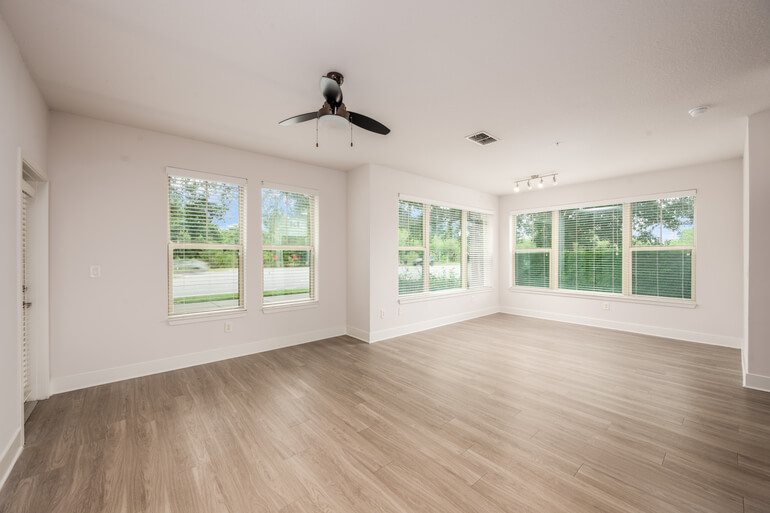
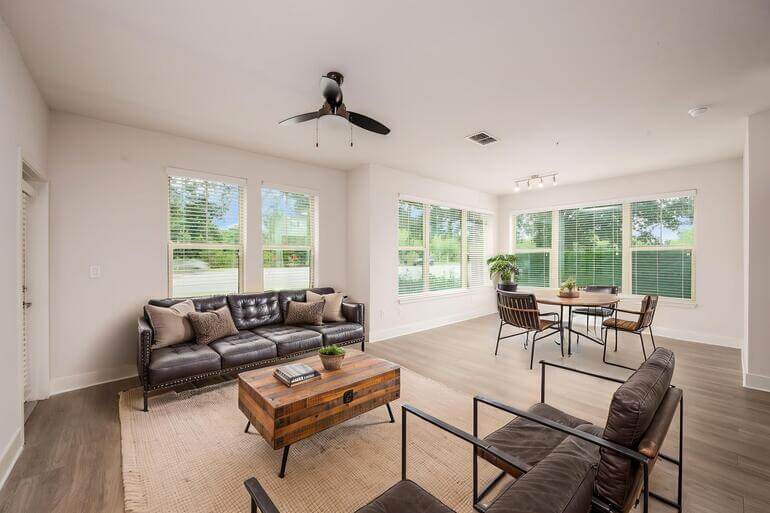
Presentation affects more than first impressions — it influences how quickly a listing moves and what buyers are willing to offer.
Research consistently shows that staged listings sell significantly faster than non-staged homes,3 with some studies reporting up to 73% faster than comparable unstaged properties. Buyers who can visualize a space are quicker to make a decision.
Better listing photos also drive more online traffic. Staged listings tend to generate higher click-through rates on portals like Zillow and Realtor.com, which means more eyes on the property before it even goes to a showing.
What Makes AI Virtual Staging Work Well (and What Doesn’t)
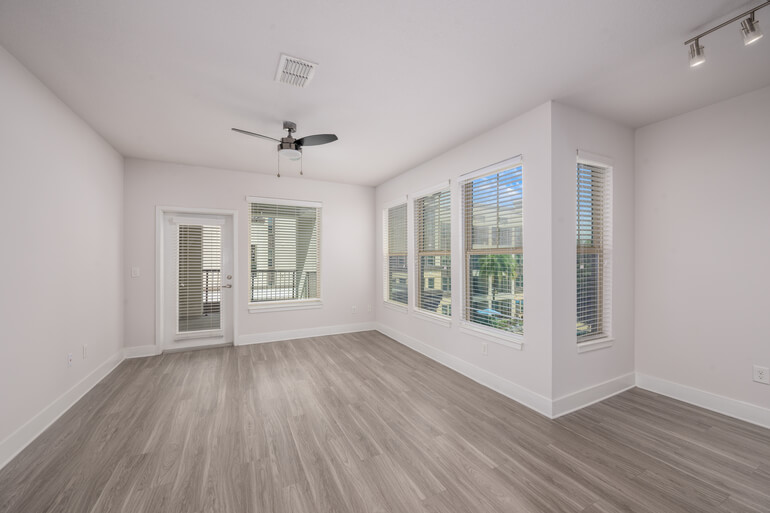
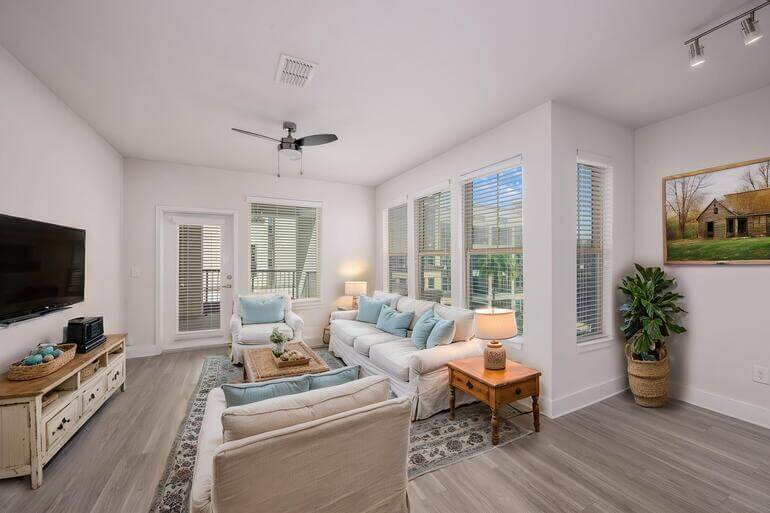
Not every listing needs virtual staging — but some benefit from it more than others.
Properties that benefit most:
- Vacant homes where sellers have already moved out
- New construction with no furnishings in place
- Investment properties being repositioned for sale
- Listings with awkward layouts that are hard to read without furniture context
Choosing the right style matters. A modern minimalist render works well in an urban condo. A warm, traditional setup fits better in a family home in the suburbs. Matching the staging style to your target buyer improves how the listing lands.
A note on disclosure: Most MLS boards and state regulations require that virtually staged photos be labeled as such. Always follow your local guidelines and mark images clearly — transparency builds trust with buyers and protects you professionally.
NAR’s 2025 Profile of Home Staging confirms that photos and virtual staging are among the top listing media buyers rely on when browsing online. It’s not just a nice-to-have — buyers now expect polished, well-presented listing imagery.
How to Add AI Virtual Staging to Your Listing Workflow
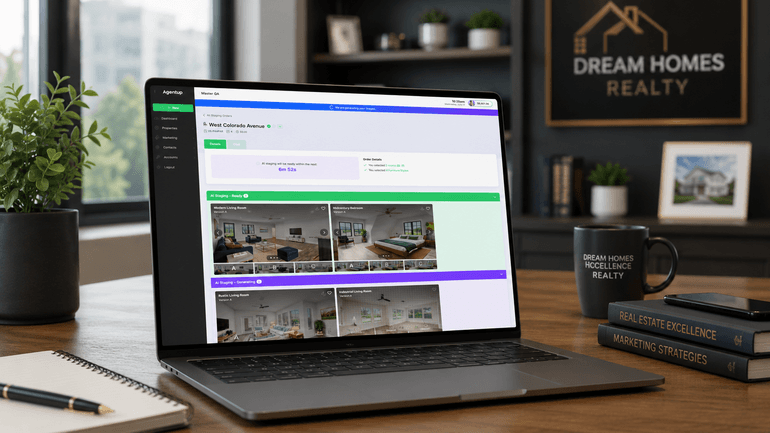
Adding virtual staging to your process doesn’t require a major overhaul. Here’s how it fits in practice:
- Shoot your listing photos as you normally would — clean, well-lit shots of each key room.
- Upload the vacant room photos to your virtual staging platform.
- Select the room type and design style that matches your target buyer.
- Receive your rendered images — typically within 24 hours or less.
- Use the staged photos in your MLS listing, property website, social posts, and marketing materials.
For a complete media workflow, combine virtual staging with AI photo editing — which polishes your listing photos from $0.75 per image — so every photo going into the market looks its best.
Once you have staged, edited images, showcase them on a single property website to give buyers a full, immersive view of the listing. Property websites let you present staged photos, floor plans, and key details in one clean, shareable link.
A Smarter Investment Than You Might Expect

The cost of AI virtual staging for real estate is easy to justify when you look at the alternative.
Traditional physical staging for a mid-range home commonly runs $1,500 to $3,000 for the first month, with ongoing rental costs if the home doesn’t sell quickly. AI virtual staging for the same property — covering the key rooms buyers care about most — might cost $25 to $75 total.
For a deeper look at the cost comparison, see our breakdown of how agents are cutting staging costs by over 90%.
Even if virtual staging contributes to just one additional showing, or shaves a week off market time, it has already paid for itself. For agents managing multiple listings, that math compounds quickly.
Quick & Easy
AI Virtual Staging
Interiors. Landscapes. Commercial. Virtually transform any space.
Helping Buyers See What’s Possible
Buyers need help seeing potential. An empty room doesn’t tell a story — a virtually staged space does. It shows buyers how a living room flows, how much space a bedroom actually has, and whether this house could realistically become their home.
For agents, that means more engagement, more showings, and a stronger position at the negotiating table.
Ready to try it? Explore our AI virtual staging and see what your vacant listings could look like — for a fraction of traditional staging costs. Check out pricing to find the plan that fits your workflow.
References: